


Build Your MES Around Your Process
Stop Forcing Your Production
into Rigid Software
The Challenge
Modern manufacturing requires agility and seamless operations. However, many production plants still rely on spreadsheets, disconnected systems, or legacy MES platforms that no longer fit evolving business needs. This gap creates high operational costs and significant risks in complex and highly regulated environments.
Visibility Gaps
A lack of live performance data leads to reactive decision-making.
Manual Data Entry
Reliance on spreadsheet tracking and manual data entry increases the risk of human error.
Compliance Risks
Fragmented data makes audits and quality controls difficult to execute and maintain.
Rigid Architecture
Legacy MES platforms are often too costly and slow to adapt to new production lines and regulatory requirements.
That is why NovioQ created a flexible and scalable MES solution built to fit each client’s unique manufacturing processes.
The Solution | Start Small, Scale Fast!
NovioQ’s MES solution, built using the OutSystems platform, offers a modular and flexible adoption alternative where processes are tailored to the manufacturer’s procedures and regulatory requirements.
A Solid Data Foundation
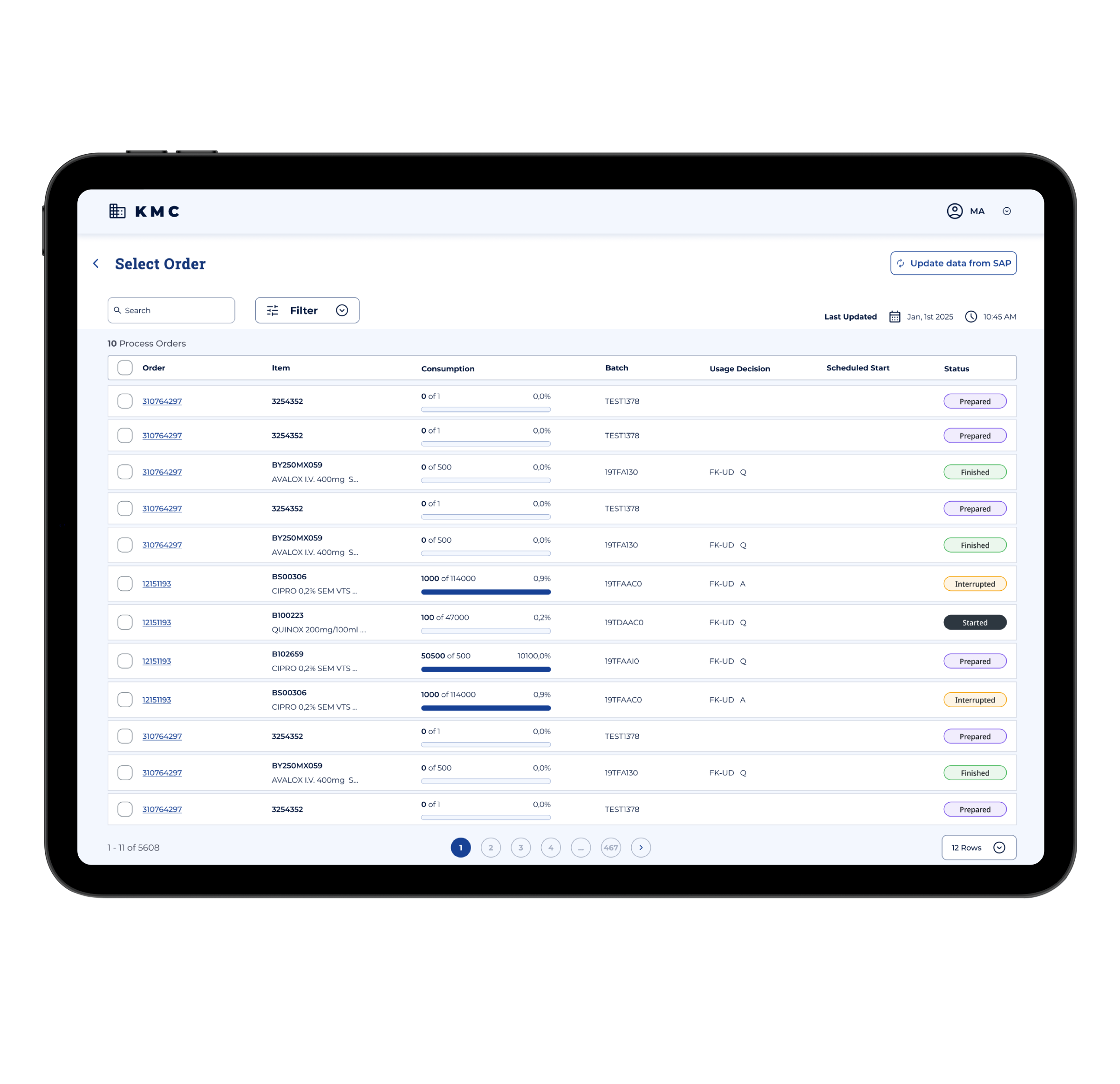
The solution integrates seamlessly with SAP through multiple connectivity options such as RFC, OData, and SAP PI/PO, to make production and operational data available in real time within the platform.
This real-time data foundation enables the deployment of intuitive business applications that directly address shop floor challenges and operational inefficiencies. Examples include:
Production & Flow
Material movement and postings
Digital operator workflows
production & traceability
Quality & Compliance
Visual inspection apps
Weighing and quality control
deviation management
Monitoring
Real-time dashboards
Downtime tracking
Performance KPI’s
The result is a connected manufacturing environment with improved visibility, reduced manual work, higher quality control, and greater operational agility.
A Field Success Story
Global Healthcare Manufacturer
60+
Factories globally
100+
Operational areas
8.5 B
annual revenue
Operates highly regulated pharmaceutical and medical manufacturing environments
The Transformation: Legacy Approach vs. NovioQ Impact
Focus Area
Legacy Approach Constraints
NovioQ Solution Impact
Forces the business to change established processes to fit standard software constraints.
Built Around Your Processes:
Adapts to existing workflows without requiring a process overhaul.

Steep ERP learning curves often lead to high resistance on the shop floor.
Faster User Adoption:
Simple, role-based applications improve operator experience and buy-in.
Lagging data makes issue resolution reactive and slows down decision-making.
Real-Time Visibility:
Instant production data enables proactive monitoring and faster decisions.
Dependence on manual entry and spreadsheets is costly and prone to human error.
Reduced Manual Work:
Automated postings and digital workflows ensure high data accuracy.

Disconnected records make traceability and audit management difficult to maintain.
Improved Quality:
Integrated tracking and digital records strengthen global compliance control.

Would you like to know how NovioQ can help you set up your apps the right way? Get in touch for a discussion – let our experts convince you. If you have any questions or would like to discuss project-specific challenges you may be experiencing, don’t hesitate to get in touch!
Syngenta builds core logistics system for a better customer experience.
Syngenta is a global agriculture company specializing in providing seeds, crop protection, and farming technology to the world’s farmers. Supported by the OutSystems platform, the US seeds division of the company launched a game-changing sales model just in time for the buying season.
With a small team of one to two developers, Syngenta built a logistics app that provides a much smoother experience to field agents and sellers. This new solution helps the company attract new partners while giving farmers more personalized service.

1-2
developers
2x
faster with 3-5x less resources
75%
fewer seed returns
Challenge
Seeding a new business model
As a customer-obsessed organization, Syngenta wanted to transform the seed buying process for customers by creating a modern, user-friendly, personalized experience for growers.
In Syngenta’s new GHX model, instead of overwhelming farmers with programs and offers, the company simplified the seed buying process to focus on what matters to them – getting the right seed on the right acre and at the right population to maximize ROI – all at one flat, per acre price. Customers also receive personalized recommendations based on their specific farms, so that they get the right seed for their fields—not just the cheapest ones.
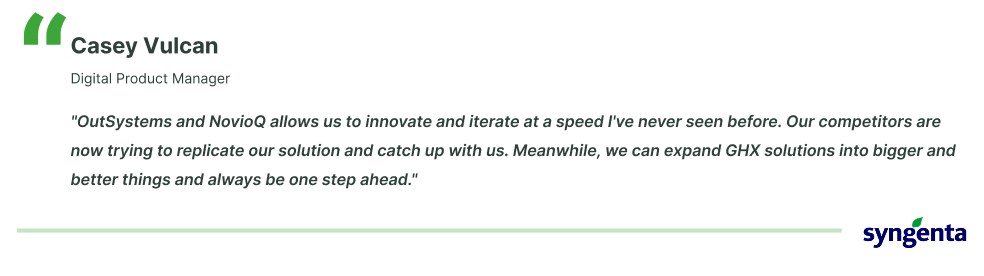
The company was ready to roll out the new model, but there was a problem: “We had no systems to support the GHX model because our previous process was through and with channel partners,” shared Casey Vulcan, Digital Product Manager. “We needed to build a new solution that we could get to market quickly, in time for the buying season, and ensure it integrated into all our existing platforms, namely SAP and Salesforce.”
With speed and integration in mind, NovioQ—an OutSystems partner Syngenta had worked on multiple projects—recommend the OutSystems platform.

Solution
OutSystems plus SAP equals exceptional user experience
The new solution built in OutSystems aimed to replace Syngenta’s fragmented logistics system and process, which required sellers and Syngenta’s collaborators to access multiple tools. “The goal was to create a user-friendly platform that allowed external agents to manage all transactional activities in a single system, from order and invoice to delivery and returns,” said Casey.
To achieve this, the new tool needed to track Syngenta’s inventory across the US, and serve as a central hub for field agents to manage orders and deliveries, and handle returns. It also had to integrate with Syngenta’s SAP system for customer invoicing. The result was GHX-Logistics.
“We were opening SAP to external users, so a good user experience was crucial to ensure they could navigate the app easily and autonomously,” explained Casey. “That’s what made OutSystems such a perfect fit.”

With the support of NovioQ—an OutSystems partner with SAP Certification—, Syngenta leveraged BAPIs to integrate the OutSystems solution with SAP. This allowed Casey and his team to easily integrate the two tools without creating a bunch of custom integrations.


Results
1-2 Developers, 2x development speed
Syngenta launched GHX-Logistics to end users in three months with only one developer, occasionally two depending on the development needs. Now, with a backlog of items to implement, that same developer delivers three to four new features every two weeks.
In nine months, GHX-Logistics has processed 1,360 deliveries and 1,230 order updates. And compared to traditional branded businesses, GHX-Logistics has a return percentage that is 75% lower.
The logistics app’s user-friendliness has also been vital in attracting new agents. Casey explained: “Without an intuitive tool, we’d quickly lose support from our agents and sellers. Instead, we’re seeing a significant jump in the number of agents working with us because they have the technology to do jobs better.”
When asked about the benefits of OutSystems, Casey highlighted the development efficiency. “Within the GHX development team, I have four different technology groups working in parallel, with each team averaging 6-10 people. In contrast, the OutSystems team has just one-two developers, yet they deliver twice as fast as any other team.”
The speed of development and the ability to quickly change and iterate is crucial for Syngenta to innovate and stay ahead of competitors. Casey concluded, “I credit our leadership team for creating this new model that disrupts a process that has existed for hundreds of years. And thanks to OutSystems, we can keep up with this progressive innovation through technology.”


Master Data in a Complex World
Streamline ERP master data creation
and configuration without IT involvement

Managing Material Master Data
Managing Master Data across a global ERP landscape is slow, fragmented and error-prone. Delays and errors in this data result in a slow down on production lines, sales order processes, goods receipts and stock management.

Why Traditional Approaches Fall Short
Enterprises generally have to choose between two difficult options.
Our Solution: Master Data Enrich
Master Data Enrich replaces ERP / SAP complexity with an intuitive, automates process, fully integrated into your ERP without IT involvement at a fraction of the investment of other alternatives.
Built on enterprise low-code platform Outsystems, it empowers data teams to run and control material creation — no IT dependency.
What you get:
- Task-based workflows
- Audit trail built in
- Accelerates ERP transformation (ie: S/4HANA migration)
- Integrates into a multi-ERP environment like SAP Netweaver, ECC & S/4HANA, Oracle and PTC
- No MM01/MM02 access needed
- Automated steps, fewer errors
- Business-managed configuration
Built to Fit Your Business
Powered by OutSystems Low-Code
Keeps the core clean
Integrates across your ERP and MDM landscape
Adapts to your rules and processes
Evolves as your business grows
MVP delivered in months, with a much smaller team and lower costs.
Example from the field
Our customer, a global manufacturer, has the following landscape
80+
FACTORIES
100+
SALES AREAS
1.4M
UNIQUE MATERIALS IN PRODUCTION
Legacy management process depended on Excel and email
Business impact of legacy approach

Steep ERP (SAP)
learning curve

Full access to MDM Interface
(MM01/MM02) required

Data quality depends on
manual coordination

No clear ownership, slow
turnaround, no auditability
Business impact of NovioQ approach

Automated workflows
configurable by the business

Full transparency into new
master data adds and changes

Faster time to implement
with less training and skills

Fewer errors
What our clients say:
“
Ruth Montgomery
Global Master Data Manager
“Working with NovioQ, we were able to quickly and efficiently deploy a new Material Master Data Creation workflow solution that is easy to work with, automates much of the create and enrich process, and engages the right people at the right time to make sure the material is ready to produce, stock, ship and sell.”
“
Would you like to know how NovioQ can help you set up your apps the right way? Get in touch for a discussion – let our experts convince you. If you have any questions or would like to discuss project-specific challenges you may be experiencing, don’t hesitate to get in touch!
BRIDGE:
Strengthening Cross-Border Healthcare Through Resource Pooling
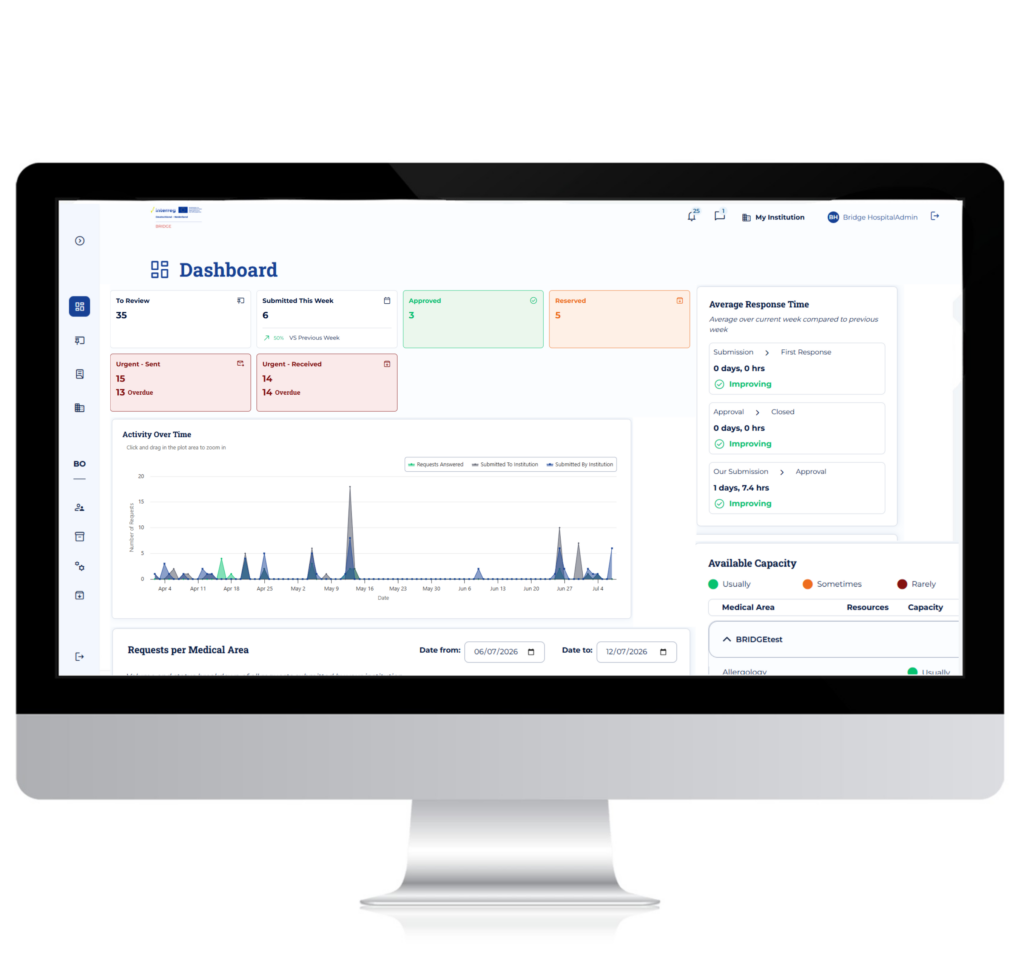
The BRIDGE project is an international healthcare innovation initiative focused on improving cross-border cooperation between healthcare organizations in the Dutch-German border region. The project is funded through the European Interreg VI Germany–Netherlands program and brings together hospitals, universities, policymakers and technology partners to strengthen healthcare resilience and accessibility.
The main objective of BRIDGE is to enable smarter and more efficient “resource pooling” across borders. Resource pooling refers to the coordinated sharing of healthcare resources such as medical equipment, hospital capacity, specialist expertise, medicines and emergency support. By improving collaboration and reducing duplication, healthcare organizations can respond faster and more effectively to shortages, emergencies and increasing healthcare pressure.
The COVID-19 pandemic highlighted how important cross-border healthcare collaboration can be. Hospitals near the border often face similar challenges, including staff shortages, limited capacity and increasing demand for specialized care. BRIDGE aims to address these challenges by developing governance models, operational processes and a digital platform that supports secure and efficient cross-border resource sharing.
The Role of NovioQ in BRIDGE
Within the BRIDGE consortium, NovioQ contributes its expertise in digital platforms, workflow optimization and healthcare process orchestration. As a technology partner, NovioQ supports the development of the digital infrastructure needed to facilitate resource pooling between healthcare organizations across borders.
NovioQ helps translate complex healthcare collaboration processes into scalable digital solutions that support transparency, coordination and operational efficiency. This includes enabling organizations to better match healthcare demand and available resources, while supporting interoperability and collaboration between different institutions and systems.
By participating in BRIDGE, NovioQ contributes to creating a more resilient and future-proof healthcare ecosystem in the Euregio region. The project aligns closely with NovioQ’s mission to improve healthcare through innovative digital solutions that support collaboration, efficiency and better patient outcomes.
The BRIDGE consortium includes organizations such as the University of Twente, Universität Münster, Universitätsklinikum Münster, healthcare institutions, regional governments and healthcare network organizations from both the Netherlands and Germany.
Partners
This project consists of a consortium of various partners. For a comprehensive overview including associate partners, click below.


For more information about the project, visit BRIDGE Resource Pooling.
If you want to keep updated about the Bridge project, follow our Linkedin page.